The Budophile
HomeGuidesGlossaryFAQAbout
Search
HomeGuidesCannabis Withdrawal: Symptoms & How to Manage

Cannabis Withdrawal: Symptoms & How to Manage

8 min readBeginner Level
ShareX
Cannabis withdrawal

What cannabis withdrawal feels like, why it happens, and how to manage it. Learn the timeline of symptoms, the endocannabinoid science behind dependence, and strategies to make quitting or taking a break easier.

This guide is for educational purposes only. Cannabis is illegal in the UK without a medical prescription. Always consult a healthcare professional before making decisions about cannabis use.

Cannabis withdrawal syndrome is a recognised medical condition, classified in the DSM-5 as Cannabis Withdrawal Disorder. It occurs when a regular cannabis user stops or significantly reduces their intake, and the brain's endocannabinoid system — which has adapted to the presence of external cannabinoids — struggles to re-regulate itself.
For years, the idea that cannabis could produce a genuine withdrawal syndrome was dismissed. The prevailing view was that cannabis was not physically addictive. But the evidence now tells a different story. A 2025 meta-analysis of 47 studies found that approximately 47% of regular cannabis users experience clinically significant withdrawal symptoms when they stop, with severity correlating to baseline frequency and dose of use.
The most common triggers are: planned tolerance breaks ('T-breaks'), switching from high-THC to CBD-dominant products, hospitalisation or travel where cannabis is unavailable, and attempts to quit entirely. The symptoms are rarely dangerous in a medical sense, but they can be intensely uncomfortable and are one of the primary reasons people relapse.
Cannabis withdrawal symptoms span psychological, physical, and behavioural domains. They vary significantly between individuals depending on frequency of use, typical dose, duration of use, and individual physiology.

Psychological Symptoms

Irritability and anger are the most commonly reported withdrawal symptoms — affecting up to 70% of regular users who stop. Users describe feeling 'shorter' with loved ones, quicker to snap, and generally on edge. Anxiety, depressed mood, and restlessness are also common. A 2024 study found that cannabis withdrawal was associated with a 40% increase in self-reported anxiety scores during the first week of abstinence.

Sleep Disruption

Insomnia and vivid, disturbing dreams are hallmark symptoms. The sleep disruption is caused by REM rebound — when THC is removed, the brain compensates for the REM suppression that occurred during regular use. This leads to intense, memorable, and often bizarre dreams that can wake the user multiple times per night. Up to 65% of users report significant sleep difficulties during withdrawal.

Physical Symptoms

Appetite changes are near-universal. Most users experience reduced appetite in the first 3-7 days (the 'food isn't interesting' phase), followed by a rebound increase. Headaches, sweating (particularly at night), chills, stomach pain, and nausea are reported by 20-40% of users. Physical symptoms tend to be milder than psychological ones but can still be distressing.

Cravings

Cravings for cannabis are intense during the first week and decrease gradually over 2-4 weeks. Cravings are often triggered by environmental cues associated with cannabis use — a favourite smoking spot, the end of a workday, social situations with other users. These cues can trigger powerful conditioned responses even after the acute withdrawal phase has passed.
The cannabis withdrawal timeline follows a predictable pattern for most users. Understanding this timeline can help users plan their approach and know what to expect.

Days 1-3: Onset

Symptoms begin 24-72 hours after the last dose. The first signs are usually sleep difficulties (trouble falling asleep, vivid dreams), irritability, and cravings. Appetite loss and mild anxiety or restlessness may begin on day 2 or 3. During this period, symptoms are moderate in intensity and escalating.

Days 4-7: Peak (The Hardest Days)

Withdrawal symptoms peak between days 4 and 7. This is when sleep disruption is most severe, irritability is at its highest, and cravings are strongest. Many users relapse during this window. Physical symptoms like headaches, sweating, and stomach discomfort — if present — are also likely to be at their worst. A 2025 study found that 70% of all relapses during a quit attempt occurred within the first 10 days.

Days 8-14: Gradual Decline

By the second week, most symptoms begin to decrease significantly. Sleep may still be disrupted but is typically improved. Appetite usually returns to normal. Irritability and mood swings lessen. Cravings remain present but are less intense and less frequent.

Days 15-28: Resolution

By the end of the second week, most acute symptoms have resolved. Some psychological symptoms — particularly cravings triggered by environmental cues, and occasional sleep disruption — can persist for 3-4 weeks. Beyond one month, withdrawal symptoms are uncommon, though some users report subtle lingering effects on mood and motivation that resolve over 2-3 months.
Cannabis withdrawal is rooted in the brain's adaptive response to chronic THC exposure. Understanding the science makes the experience less mysterious and easier to manage.
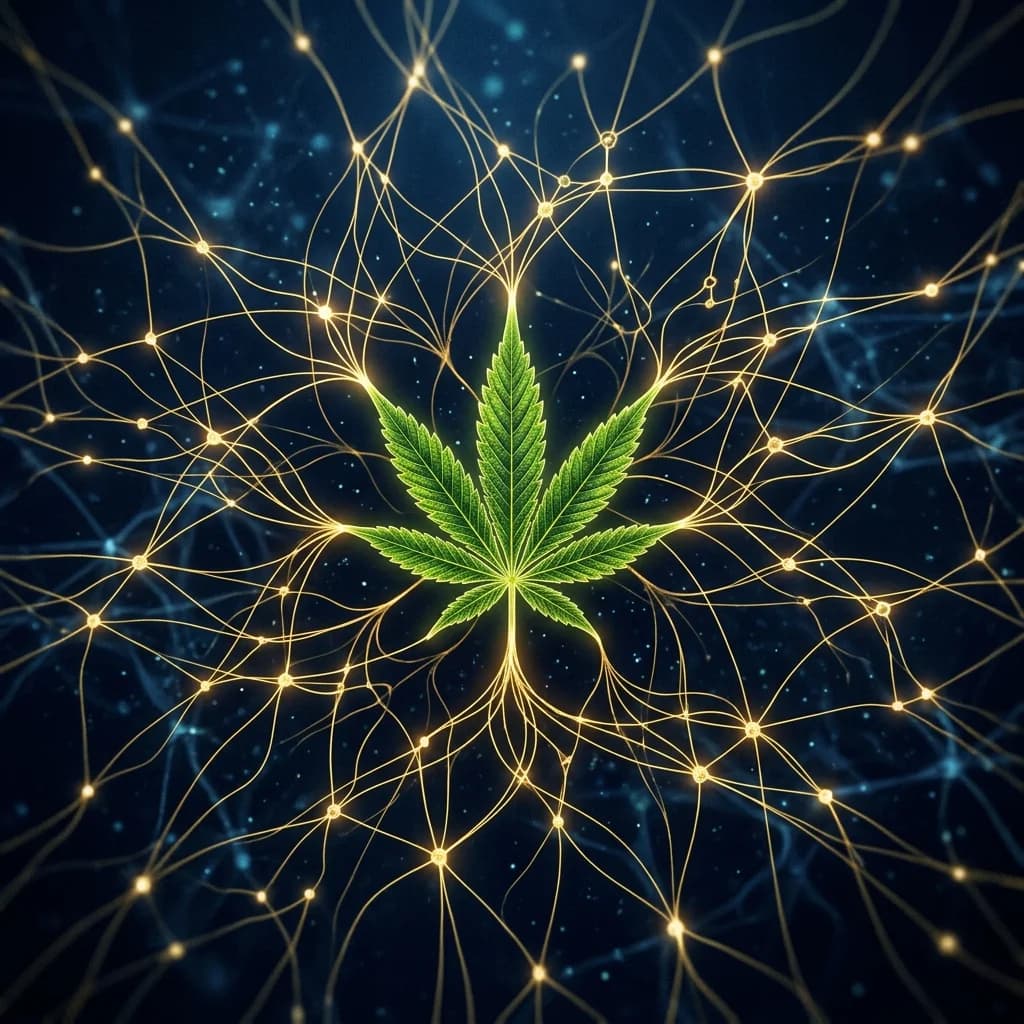
When you use cannabis regularly, THC floods the brain's endocannabinoid system, binding to CB1 receptors — the most abundant G-protein-coupled receptors in the central nervous system. To maintain balance (homeostasis), the brain responds by downregulating CB1 receptors: reducing their density and sensitivity to compensate for the constant stimulation.
This is the biological basis of tolerance. Over time, more THC is needed to achieve the same effect because there are fewer responsive CB1 receptors. When cannabis use stops suddenly, the brain is left with a reduced number of CB1 receptors and a diminished capacity to produce its own endocannabinoids (anandamide and 2-AG). The endocannabinoid system enters a temporary 'deficiency state'.
CB1 receptor density begins to normalise within 48-72 hours of abstinence and returns to baseline levels within 2-4 weeks in most studies. This recovery timeline maps directly onto the withdrawal timeline — the peak of withdrawal symptoms coincides with the lowest point of CB1 receptor availability, and the gradual resolution of symptoms tracks the recovery of normal receptor function. This is also why tapering (gradually reducing dose) can attenuate withdrawal severity — it allows the brain time to upregulate receptors gradually rather than struggling to adapt to a sudden absence of THC.
Cannabis withdrawal is rarely dangerous, but it can be challenging. Evidence-based strategies can significantly reduce discomfort and improve the likelihood of success.

Tapering

The single most effective strategy for minimising withdrawal is tapering — gradually reducing your cannabis use over 1-3 weeks rather than stopping abruptly. A 2025 study found that a 2-week tapering protocol (reducing dose by 25% every 3-4 days) reduced withdrawal severity scores by 40% compared to abrupt cessation. Tapering also significantly reduced relapse rates at 1-month follow-up.

Exercise

Aerobic exercise increases endocannabinoid levels (the 'runner's high' is partly mediated by anandamide), which may help compensate for the endocannabinoid deficiency during withdrawal. A 2024 pilot study found that 30 minutes of moderate-intensity exercise daily reduced withdrawal-related irritability and cravings by 35% compared to a sedentary control group.

Sleep Hygiene

Given that sleep disruption is one of the most distressing withdrawal symptoms, proactive sleep hygiene is essential. Strategies include: maintaining a consistent bedtime, no screens 60 minutes before sleep, avoiding caffeine after 2pm, keeping the bedroom cool and dark, and using relaxation techniques like progressive muscle relaxation or meditation.

CBD for Symptoms

CBD does not produce significant CB1 activation and does not prevent withdrawal in the same way that replacing THC would. However, CBD may help manage specific withdrawal symptoms, particularly anxiety and sleep disruption. A 2024 observational study of 120 cannabis users undergoing a planned T-break found that those using 50-100mg CBD daily reported 28% lower anxiety scores and 22% better sleep quality during the first withdrawal week compared to those using no CBD.

Nutrition and Hydration

Appetite loss during the first week can lead to low blood sugar, which worsens irritability and fatigue. Small, frequent meals, staying well-hydrated, and electrolyte replacement (especially if experiencing sweating or nausea) can help stabilise mood and energy levels.
For most people, cannabis withdrawal is manageable at home with the strategies above. However, there are situations where professional help is advisable.
If you have a history of mental health conditions — particularly depression, anxiety disorders, bipolar disorder, or psychosis — cannabis withdrawal can precipitate a relapse of these conditions. A 2025 UK study found that 18% of regular cannabis users with a pre-existing mental health condition experienced significant symptom worsening during a quit attempt. If you have a diagnosed mental health condition, it is strongly recommended to plan withdrawal with input from your GP or psychiatrist.
Severe or prolonged symptoms lasting beyond 4 weeks are uncommon but can occur in heavy, long-term users. If withdrawal symptoms are significantly impairing your ability to work, maintain relationships, or care for yourself, speak to a healthcare professional. Talking therapies — particularly CBT (cognitive behavioural therapy) and motivational interviewing — have been shown to improve quit success rates.
The UK has several resources for cannabis dependence. Your GP can refer you to local drug and alcohol services under the NHS. Charity services like FRANK (confidential helpline for information and advice), Talk to Frank, and local CGL (Change Grow Live) clinics offer free support. For those seeking structured support, residential detox is rarely needed for cannabis alone, but may be warranted if cannabis is part of a broader polysubstance use pattern.

Quick Questions

Symptoms typically begin within 24-72 hours of your last dose, peak around days 4-7, and resolve within 2-4 weeks for most users. Sleep disruption and cravings may persist at low levels for up to a month, and some users report subtle mood changes for 2-3 months. The timeline is shorter and milder with tapering compared to abrupt cessation.
CBD can help manage specific withdrawal symptoms — particularly anxiety and sleep disruption — but it does not prevent withdrawal or significantly reduce cravings. A study found 50-100mg CBD daily reduced anxiety scores by 28% during withdrawal. CBD works by modulating serotonin receptors and reducing anxiety rather than replacing the CB1 activation that THC provides.
Cannabis withdrawal is rarely medically dangerous in the way that alcohol or benzodiazepine withdrawal can be. There is no risk of seizures, delirium tremens, or death from cannabis withdrawal alone. However, it can be intensely uncomfortable in some cases, and the psychological distress may trigger relapse of underlying mental health conditions. If you have a pre-existing mental health condition, seek medical advice before stopping.
Cannabis withdrawal is primarily psychological — irritability, anxiety, sleep disruption, and cravings — with milder physical symptoms than opioids, alcohol, or benzodiazepines. It does not produce the potentially fatal complications of alcohol withdrawal (seizures, DTs) or the intense physical sickness of opioid withdrawal. However, cannabis withdrawal lasts longer than opioid withdrawal in many cases (2-4 weeks vs 5-10 days for heroin) and the cravings can be highly persistent.

About the Author

DM

Dave Mak

Dave founded The Budophile to create clear, honest cannabis education for UK beginners. With a background in health research and a network of specialist contributors, he ensures every guide is accurate, evidence-based, and practical. He also runs Baked & Rated for product reviews and The Green Prescription for medical cannabis access guidance.

Continue Learning
Addiction & Dependence

Read this guide next →
Tolerance Breaks

Read this guide next →
The Endocannabinoid System Explained

Read this guide next →
Cannabis & Mental Health

Read this guide next →

CBD Oil Guide

Read this guide next →

Cannabis for Sleep & Insomnia

Read this guide next →

CBD vs THC for Anxiety

Read this guide next →
Medical Cannabis Safety

Read this guide next →

The Budophile

Cannabis education for beginners. Clear, honest, UK-legal information to help you make informed choices.

New Guides

Learn

  • Guides
  • Glossary
  • FAQ

Info

  • About
  • Contact
  • Privacy
  • RSS Feed

Our Network

  • DAM Live — Amsterdam Guide
  • The Green Prescription — UK Medical Cannabis
  • Baked & Rated — Hardware Reviews
  • Strain Genetics Archive

© 2026 The Budophile. For educational purposes only.