The Endocannabinoid System: How Cannabis Works in Your Body
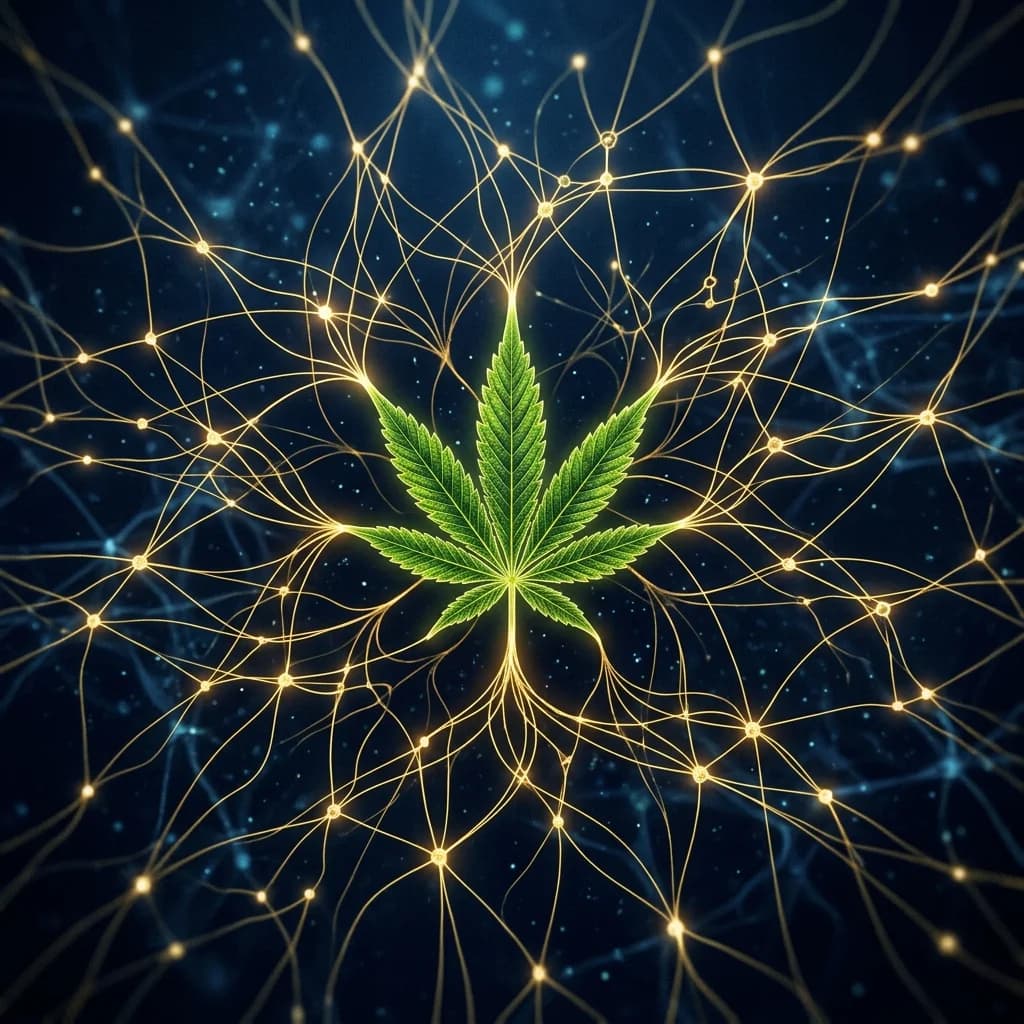
A beginner-friendly guide to the most important biological system you've never heard of — how the endocannabinoid system works, what it does, and how THC and CBD interact with your body's natural chemistry.
This guide is for educational purposes only. Cannabis is illegal in the UK without a medical prescription. Always consult a healthcare professional before making decisions about cannabis use.
You Have a Cannabis System in Your Body
The Three Parts of the ECS
1. Cannabinoid Receptors (The Locks)
These are protein structures on the surface of your cells. Think of them as locks waiting for a key. When the right chemical binds to a receptor, it triggers a response inside the cell. There are two main types: CB1 receptors, concentrated in your brain and central nervous system, and CB2 receptors, found primarily in your immune system, gut, and peripheral tissues. CB1 receptors influence mood, memory, appetite, pain, and sleep. CB2 receptors regulate inflammation, immune responses, and digestion.2. Endocannabinoids (The Keys)
Your body produces two main endocannabinoids: anandamide (named after the Sanskrit word 'ananda' meaning bliss) and 2-AG. Anandamide is often called the 'bliss molecule' — it's released when you exercise, meditate, or feel happy. 2-AG is more abundant and plays a broader role in regulating pain, inflammation, and immune function. Unlike most neurotransmitters, endocannabinoids are produced on demand — your body makes them when they're needed, rather than storing them for later.3. Metabolic Enzymes (The Cleanup Crew)
Two main enzymes break down endocannabinoids once they've done their job. FAAH breaks down anandamide, and MAGL breaks down 2-AG. This rapid breakdown is why endocannabinoid effects are brief and localised — they're produced, bind to receptors, and are dismantled within seconds to minutes.The Retrograde Signalling Superpower
How THC and CBD Interact with the ECS
THC: The Key That Fits the Lock
THC is a partial agonist at CB1 and CB2 receptors. That means it binds to the receptor and activates it, but not as powerfully as your body's own endocannabinoids. However, THC overpowers the system in two ways: it's present in much larger quantities than your natural endocannabinoids, and it isn't broken down as quickly by FAAH and MAGL. The result is a prolonged, widespread activation of CB1 receptors across the brain — producing the characteristic cannabis high.CBD: The Modulator
CBD works very differently. It doesn't bind strongly to CB1 or CB2 receptors. Instead, it acts as a negative allosteric modulator of CB1 — meaning it changes the shape of the CB1 receptor so that THC (and anandamide) have a harder time activating it. This is why CBD can reduce the psychoactive effects of THC. CBD also: inhibits FAAH, allowing your natural anandamide levels to rise; activates TRPV1 (vanilloid) receptors, which are involved in pain perception; activates serotonin 5-HT1A receptors, which contributes to its anti-anxiety effects; and has independent anti-inflammatory effects through CB2 and other pathways.Other Cannabinoids
CBN (cannabinol) binds weakly to CB1 receptors but is more sedating than THC. CBG (cannabigerol) interacts with both CB1 and CB2 and shows promise for inflammation and pain. THCV (tetrahydrocannabivarin) is interesting — at low doses it blocks CB1 receptors (like CBD), but at high doses it activates them (like THC).Why the ECS Matters for Your Health
- Pain: Modulates pain signals at multiple levels — in the spinal cord, brainstem, and peripheral nerves
- Mood: Regulates anxiety, fear, stress responses, and emotional memory
- Sleep: Influences sleep-wake cycles and sleep architecture
- Appetite and metabolism: Controls hunger signals and energy balance
- Immune function: Regulates inflammation and immune cell activity
- Memory and learning: Modulates synaptic plasticity — how your brain forms and maintains connections
- Neuroprotection: Protects brain cells from damage and supports recovery after injury
Quick Questions
About the Author
Dave Mak
Dave founded The Budophile to create clear, honest cannabis education for UK beginners. With a background in health research and a network of specialist contributors, he ensures every guide is accurate, evidence-based, and practical. He also runs Baked & Rated for product reviews and The Green Prescription for medical cannabis access guidance.
Continue Learning
What Is Cannabis? Beginner's Guide
Read this guide next →
THC vs CBD Explained
Read this guide next →
Cannabis for Chronic Pain
Read this guide next →
CBD: What You Need to Know
Read this guide next →
CBN for Sleep
Read this guide next →
How Long Does Cannabis Stay in Your System?
Read this guide next →
What Are Terpenes?
Read this guide next →
Cannabis & Medication Interactions
Read this guide next →