The Budophile
HomeGuidesGlossaryFAQAbout
Search
HomeGuidesHow to Talk to Your GP About Medical Cannabis
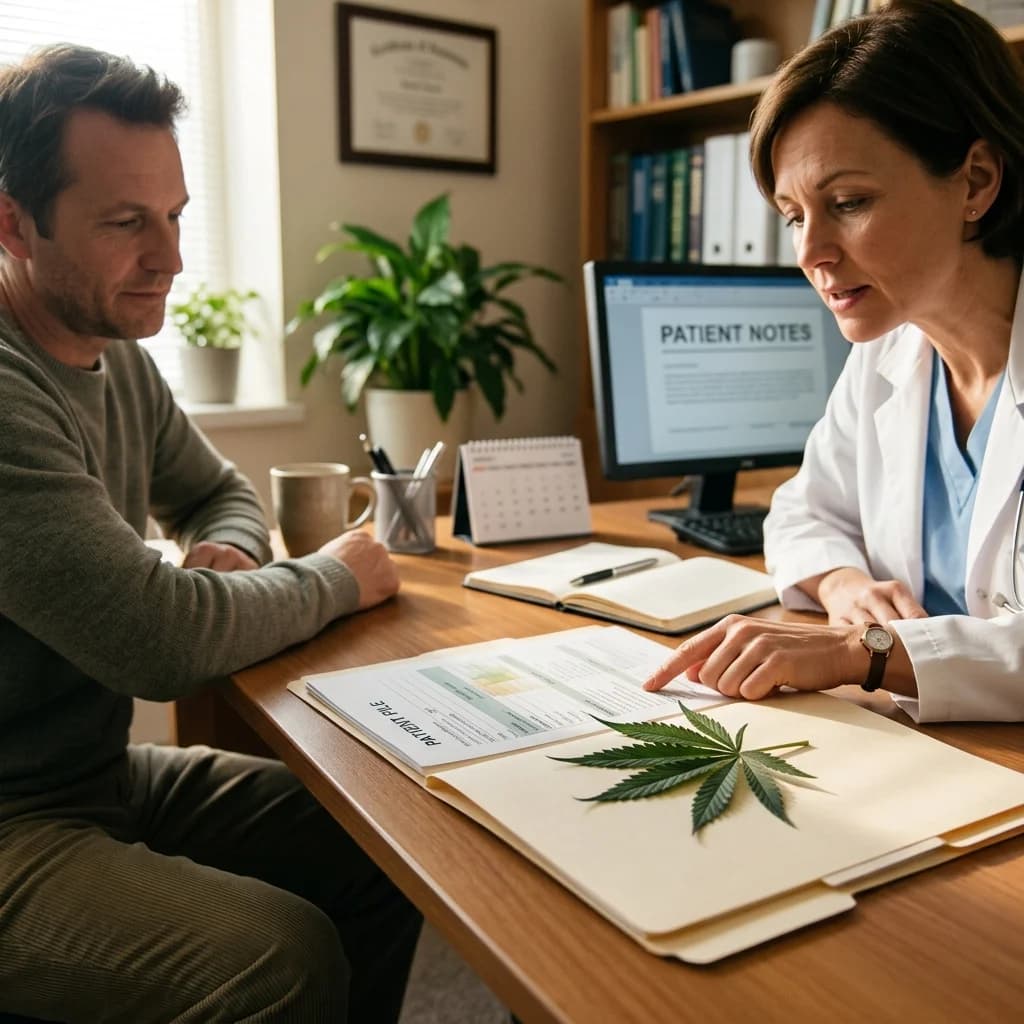
How to Talk to Your GP About Medical Cannabis

9 min readBeginner Level
ShareX
Talking to a doctor about medical cannabis

A practical guide to discussing medical cannabis with your GP — how to prepare for the conversation, what questions to expect, how to handle a difficult response, and understanding your GP's role in the private clinic process.

This guide is for educational purposes only. Cannabis is illegal in the UK without a medical prescription. Always consult a healthcare professional before making decisions about cannabis use.

For most people, the first step toward medical cannabis is not a private clinic — it's their GP. The NHS doctor who knows your medical history, manages your existing medications, and holds your Summary Care Record is the gatekeeper to everything that follows. And yet, many patients find this the most intimidating part of the entire process.
Every UK medical cannabis clinic requires access to your GP records. Most clinics will write to your GP informing them of your prescription. Some clinics ask for a referral or letter of support. And if you're taking other medications, your GP needs to know about your cannabis prescription to manage potential interactions safely.
The relationship between GPs and medical cannabis is complicated. Most GPs have received little to no training on the endocannabinoid system or cannabis-based medicines. Many are unaware that cannabis was rescheduled in 2018. Some are actively skeptical or hostile to the idea. Understanding where your GP is coming from — and preparing accordingly — makes a successful conversation far more likely.
This guide walks you through exactly how to approach that conversation: what to say, what to bring, what to expect, and what to do if your GP says no.
The single most important thing to understand: most GPs know very little about medical cannabis. A 2024 survey found that only 12% of GPs felt confident discussing cannabis-based medicinal products (CBMPs) with patients. Over 70% said they had received no formal training on the topic.
This is not your GP's fault. Medical cannabis was only rescheduled in the UK in November 2018 — barely 8 years ago. It is not part of the standard medical school curriculum. Most GPs have never prescribed it, never seen a patient on it (that they know of), and rely on the same sources of information you do — NICE guidelines, the MHRA, and medical journals.
There are three licensed cannabis-based products that GPs can prescribe on the NHS: Sativex (for MS spasticity), Epidyolex (for severe childhood epilepsy), and Nabilone (for chemotherapy nausea). These are the only products your GP will have any familiarity with. Unlicensed products like cannabis flower and full-spectrum oils — which make up over 95% of private prescriptions — are a completely different category.
What your GP definitely does know: your medical history, your current medications, your past treatment failures, and your NHS number. This information is invaluable when you approach a private clinic. Your GP's letter of support (or even just your GP records) can significantly strengthen your clinic application.
The bottom line: don't expect your GP to be an expert. Do expect them to be cautious. And do bring them information they can use — printed copies of relevant NICE guidelines, clinic recommendation letters, and a clear explanation of what you're asking for.
Walking into a GP appointment unprepared is the most common mistake. Here's exactly what to do before you book:

1. Know Your Condition and Treatment History

Your GP will want to know: What condition are you seeking treatment for? When were you diagnosed? What treatments have you tried? Why did they fail (ineffective, side effects, contraindications)? A written summary of your treatment history shows you've done the homework and makes the conversation productive.

2. Understand the Legal Framework

You don't need to be a legal expert, but you should know the basics: medical cannabis was legalised by prescription in November 2018. It can be prescribed by specialist doctors on the GMC Specialist Register for certain conditions. GPs cannot prescribe unlicensed cannabis products themselves but can refer patients to specialists or support private applications. This knowledge signals that you're serious and informed.

3. Research Clinics Beforehand

Before you talk to your GP, know which clinic you're interested in. Visit The Green Prescription to compare every major UK medical cannabis clinic — their accepted conditions, pricing, patient reviews, and access schemes. Being able to say 'I've looked into the process and I'm considering X clinic' makes the conversation concrete rather than hypothetical.

4. Gather Your Documents

Bring: a list of your current medications (including doses and how long you've been taking them), a summary of past treatments for your condition (including why they stopped), any relevant specialist letters or test results, and your NHS number. If you have a formal diagnosis letter, bring that too.

5. Prepare What to Say

Practice a short opening statement: 'I've been struggling with [condition] for [time]. I've tried [treatments] without sufficient relief. I've been researching medical cannabis and I'd like to discuss whether it might be appropriate for me, and how we can work together if I pursue a private prescription.'
A typical GP appointment lasts 10 minutes. You need to be efficient. Here's how a successful conversation flows:

Opening (1-2 minutes)

State your request clearly and calmly. 'I'd like to discuss medical cannabis as a treatment option for my [condition].' Avoid being defensive or overly apologetic — you're asking about a legal medical treatment, not confessing to a crime.

Discussion (3-5 minutes)

Your GP will likely ask: What exactly are you hoping cannabis will do? Have you tried all conventional options? Do you understand the risks? Have you looked into the practical process? Answer honestly. If you've already used cannabis illegally, you may choose to disclose this — it helps GPs understand your perspective, but it's not required. Focus on the medical benefits you're seeking (pain relief, sleep improvement, anxiety reduction) rather than the substance itself.

Documentation (2-3 minutes)

If your GP is supportive, they can: provide a letter of support for your clinic application, transfer your medical records to the clinic, or refer you to an NHS specialist (though this rarely leads to a prescription). If your GP is neutral or uncertain, they may still agree to share your records.

Outcome (1-2 minutes)

The conversation typically ends one of three ways: supportive ('I'll help however I can'), neutral ('I don't know much about this but I'll share your records'), or opposed ('I don't support this and I can't be involved'). Each outcome has a clear next step — see the sections below.
A supportive GP is a huge advantage. Here's what to ask for:

Letter of Support

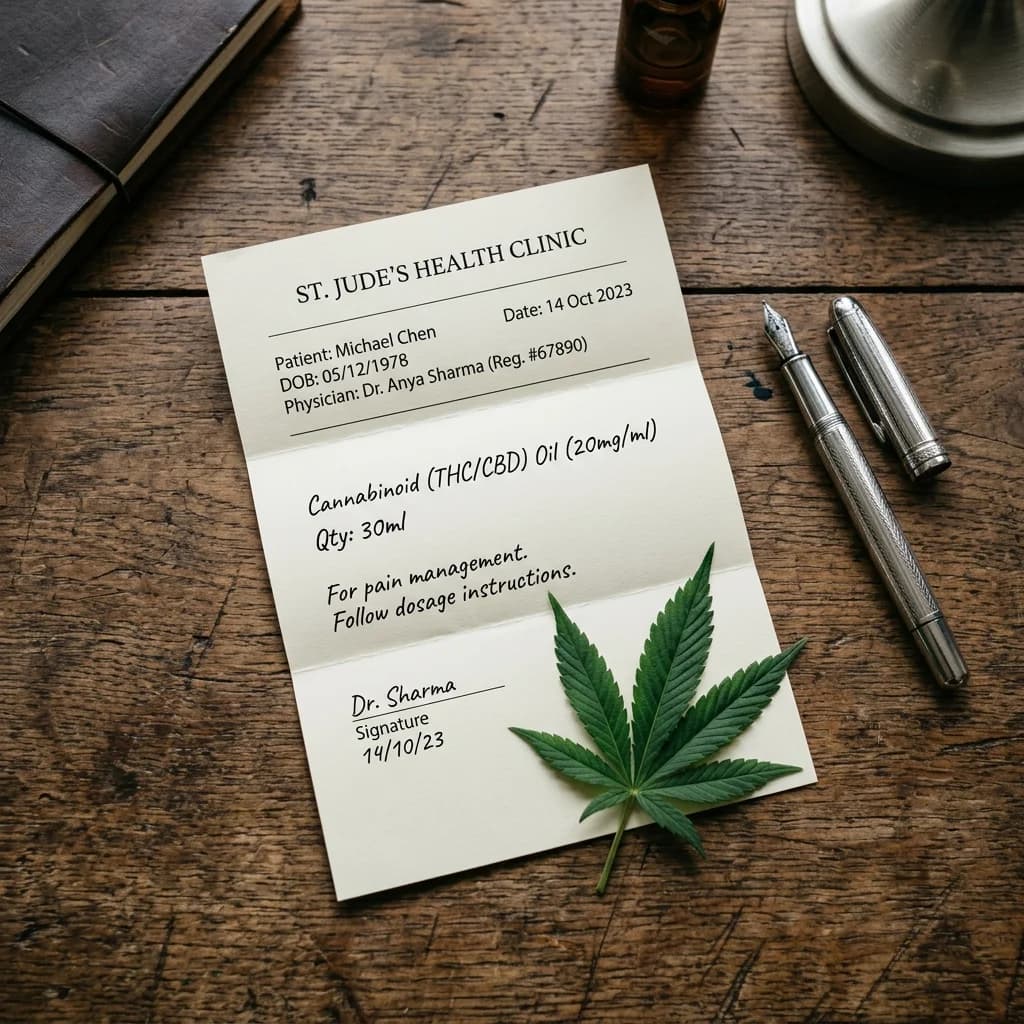
This is the most valuable thing a GP can provide. The letter confirms your diagnosis, your treatment history, and states that they have no objection to you pursuing medical cannabis through a private clinic. Some clinics require this; all clinics welcome it. A letter of support can significantly speed up the approval process and may even influence which products you're prescribed.

Record Transfer

Your GP practice will need to send your Summary Care Record to the clinic. This is a standard administrative process — your GP's reception team usually handles it. Ask your GP to authorise the transfer or tell you who to speak to in the practice.

Shared Care (Very Rare)

In exceptional cases, your GP might agree to a shared care arrangement where the private clinic handles prescribing and your GP manages monitoring and routine follow-ups. This almost never happens with cannabis — GPs are explicitly advised against it by NHS England — but if your GP offers it, it can significantly reduce your costs.

Ongoing Communication

Thank your GP and ask how they'd like to be kept updated. Most clinics automatically send a letter to your GP after each consultation, but it's good practice to ask. Maintaining a positive relationship with your GP is important — you still need them for non-cannabis health matters.
A neutral or uncertain GP is the most common outcome. They may say things like 'I don't know enough about this' or 'I'm not comfortable recommending something I don't understand.' This is not a rejection — it's an honest acknowledgment of their knowledge gap.
What to say: 'I understand this is outside your usual area. I'm not asking you to prescribe it — I'm asking you to support my application to a private clinic where the specialists have the right expertise. Would you be willing to share my records and write a brief letter confirming my diagnosis and treatment history?'
Most GPs will agree to record sharing even if they're uncomfortable with cannabis itself. Records don't constitute endorsement — they're factual medical history. A letter of support is more difficult, but some GPs will agree to a factual letter that doesn't recommend cannabis but simply confirms your clinical picture.
If your GP refuses to share records: you have a legal right to access your medical records under the Data Protection Act 2018. You can request them directly from the practice's data protection officer. Most clinics can guide you through this process.
For guidance on which clinics work best with GPs who take a neutral stance, The Green Prescription includes patient reviews that often mention how clinics handled GP communication.
Some GPs refuse outright. Common objections include: 'Cannabis is illegal' (it's not, when prescribed), 'There's no evidence it works' (there is, though it's mixed), 'I can't be involved in this' (you're not asking them to prescribe), or 'You should see a psychiatrist/pain specialist first' (this may be a valid concern depending on your condition).
If your GP refuses, stay calm. Getting into an argument is counterproductive. Say: 'I understand your position. Thank you for your time. I'll pursue this through a private clinic directly.'
You do not need your GP's permission to see a private clinic. Private clinics have their own specialist doctors who assess your eligibility independently of your GP. A GP's refusal has no legal power to stop you — it just means the process may be slightly more administrative.
If your GP refuses to share your records, you can: formally request your records under the Data Protection Act 2018 (they must respond within 1 calendar month), use the NHS App to download your GP record summary, or ask the clinic to request your records directly (most clinics have a process for this).
Some patients choose to change GP practices if their current GP is strongly opposed. This is a personal decision — check whether other local practices have GPs who are more informed about medical cannabis. Online patient communities (r/ukmedicalcannabis on Reddit, UK Medical Cannabis Patient Group on Facebook) often share recommendations for cannabis-friendly GP practices.
Once you've had the conversation, here's your checklist:

If your GP was supportive or neutral:

Request a copy of any letter they agreed to write. Confirm that your records will be sent to the clinic. Follow up with the practice if records don't arrive within 2 weeks (this is a common delay point).

Choose and book your clinic:

Use The Green Prescription to compare clinics by condition, pricing, and patient reviews. Book an initial consultation (£150-£400). Have your NHS number, GP records, and treatment history ready.

If your GP refused:

Request your records directly. Book a clinic consultation without GP input. Some clinics have dedicated patient support teams that help with record collection — ask about this when you book.

Inform your GP of the outcome:

Once you receive a prescription, the clinic will automatically write to your GP. This is a legal requirement. Even if your GP was opposed, they need to know what you're taking to avoid dangerous drug interactions.
For an overview of the full process — from initial consultation to receiving your medication — read our How to Get a Medical Cannabis Prescription guide.

Quick Questions

No. You do not need your GP's permission. Private clinics have their own specialist doctors who assess your eligibility independently. A supportive GP makes the process smoother but is not required.
Yes. The clinic is legally required to inform your GP. They'll send a letter after your initial consultation and after each follow-up. This is for safety — your GP needs to know all medications you're taking.
You have a legal right to your records under the Data Protection Act 2018. You can request them directly from the practice. The clinic's patient support team can usually help with this process.
No. GPs cannot prescribe unlicensed cannabis-based products. They can prescribe three licensed products (Sativex, Epidyolex, Nabilone) in very specific circumstances, but this is extremely rare in practice.
This is a personal decision. Some patients find that honesty helps GPs understand their perspective. Others prefer not to disclose. Anything you tell your GP is confidential and cannot be shared with employers or law enforcement without your consent.

About the Author

DM

Dave Mak

Dave founded The Budophile to create clear, honest cannabis education for UK beginners. With a background in health research and a network of specialist contributors, he ensures every guide is accurate, evidence-based, and practical. He also runs Baked & Rated for product reviews and The Green Prescription for medical cannabis access guidance.

Continue Learning

Cannabis for Seniors

Read this guide next →
How to Get a Medical Cannabis Prescription

Read this guide next →
What Conditions Qualify for Medical Cannabis?

Read this guide next →

Is Cannabis Legal in the UK?

Read this guide next →
Can I Get Medical Cannabis on the NHS?

Read this guide next →

Cannabis & Medication Interactions

Read this guide next →
Medical Cannabis for Chronic Pain: UK Access

Read this guide next →

Cannabis & Mental Health

Read this guide next →

The Budophile

Cannabis education for beginners. Clear, honest, UK-legal information to help you make informed choices.

New Guides

Learn

  • Guides
  • Glossary
  • FAQ

Info

  • About
  • Contact
  • Privacy
  • RSS Feed

Our Network

  • DAM Live — Amsterdam Guide
  • The Green Prescription — UK Medical Cannabis
  • Baked & Rated — Hardware Reviews
  • Strain Genetics Archive

© 2026 The Budophile. For educational purposes only.