The Budophile
HomeGuidesGlossaryFAQAbout
Search
HomeGuidesMedical Cannabis for Chronic Pain: UK Access Guide
Medical Cannabis for Chronic Pain: UK Access Guide

8 min readBeginner Level
ShareX
Medical cannabis for chronic pain UK

How to access medical cannabis for chronic pain through UK private clinics — eligibility, process, costs, products, and what to expect from treatment.

This guide is for educational purposes only. Cannabis is illegal in the UK without a medical prescription. Always consult a healthcare professional before making decisions about cannabis use.

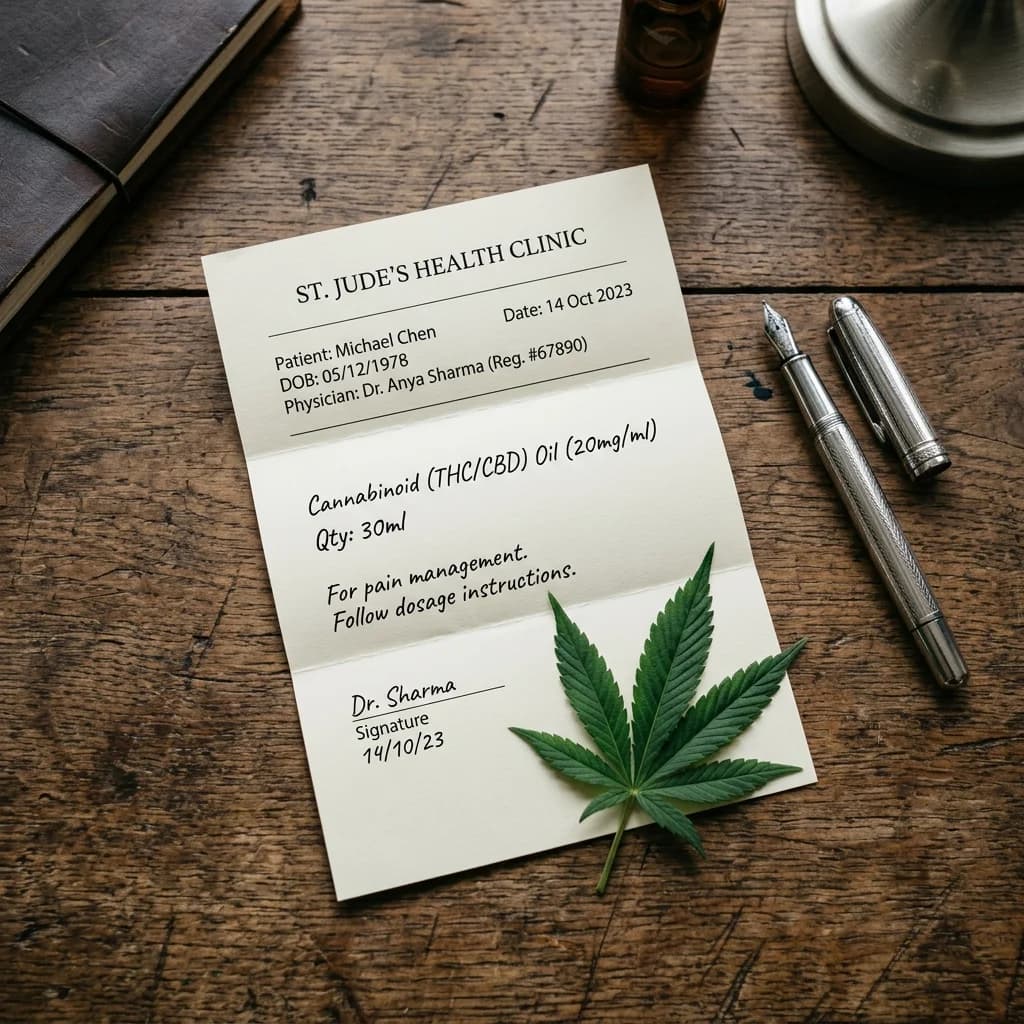
Yes, medical cannabis can be prescribed for chronic pain in the UK through private clinics. Chronic pain is the most common reason patients seek a medical cannabis prescription — accounting for approximately 50% of all prescriptions in the UK Medical Cannabis Registry.
However, this does not mean cannabis is widely available for chronic pain on the NHS. Current NICE guidelines (NG144) do not recommend cannabis-based products for chronic pain outside of clinical trials. The NHS prescribing of cannabis for pain is virtually non-existent. Nearly all patients access treatment through private clinics.
The legal framework: Cannabis-based medicinal products (CBMPs) were rescheduled in the UK in November 2018. They can be prescribed by specialist doctors on the GMC Specialist Register. GPs cannot prescribe CBMPs on the NHS for chronic pain and are not obliged to enter shared care agreements with private clinics.
The evidence debate is important context. Official UK guidelines recommend against cannabis for chronic pain, citing limited evidence from randomised trials. However, real-world data from the UK Medical Cannabis Registry shows significant improvements in pain, sleep, and quality of life for many patients. Private clinics prescribe based on this real-world evidence and individual patient assessment.
Chronic pain itself is not a single condition — it's a symptom with many possible causes. UK private clinics generally accept patients with chronic pain if there is a clear diagnosis and conventional treatments have been tried and found ineffective or poorly tolerated.
Conditions commonly accepted include: chronic neuropathic pain (nerve damage from diabetes, shingles, surgery, or injury), fibromyalgia, chronic back and neck pain, arthritis and joint pain, pelvic pain conditions (endometriosis, interstitial cystitis), Ehlers-Danlos syndrome and other connective tissue disorders, complex regional pain syndrome (CRPS), migraines and chronic headache disorders, and cancer-related pain.
To be accepted for treatment, you typically need: a formal diagnosis from a GP or specialist, evidence that conventional treatments have been tried (physiotherapy, pain medications, psychological approaches), no active psychosis or severe mental health contraindications, and not be pregnant or breastfeeding.
Some clinics have specific minimum criteria — for example, requiring that pain has persisted for at least 3-6 months despite treatment. Each clinic has its own assessment process, and acceptance is not guaranteed. If one clinic declines, another may accept based on a different clinical judgement.
The process for accessing medical cannabis for chronic pain is straightforward but requires several steps:
Step 1: Gather your medical records. You'll need a Summary Care Record from your GP, any relevant specialist letters (rheumatology, neurology, pain clinic), and a list of current and past medications tried for pain, including dosages and why they were stopped.
Step 2: Choose a clinic. Several UK clinics specialise in medical cannabis for chronic pain. For a comparison of clinics — including pricing, accepted conditions, and patient reviews — visit The Green Prescription. They maintain an up-to-date database of UK clinics.
Step 3: Book an initial consultation (£150-£300). This is with a specialist doctor who will review your history, discuss your pain condition, and determine if cannabis-based treatment might be appropriate. The consultation typically lasts 30-60 minutes and can be done via video call.
Step 4: Receive a prescription and medication. If approved, you'll receive a prescription for specific products — usually oils, dried flower for vaporisation, or both. The clinic will send the prescription to a pharmacy, which dispatches the medication to your home by courier (typically next-day delivery).
Step 5: Follow-up appointments (typically at 1 month, 3 months, then every 3-6 months). These monitor your response to treatment, adjust dosages, check for side effects, and review whether treatment should continue. Ongoing prescriptions depend on demonstrated benefit.
For chronic pain, two main product types are prescribed in the UK: cannabis oils (taken sublingually or orally) and dried cannabis flower (for vaporisation). Many patients use both in combination.
Oils provide a baseline level of pain relief that lasts 6-12 hours. They're easier to dose precisely, have no respiratory risks, and are more discreet. The downsides are slower onset (30-90 minutes) and less control over immediate symptom spikes. Oils are typically preferred for patients who need consistent, long-lasting relief.
Dried flower (vaped) provides fast-acting relief within seconds to minutes, making it useful for breakthrough pain or flares. It's easier to 'titrate to effect' — you can take a small puff and wait to see how it feels before taking more. The downsides are shorter duration (1-3 hours), the need for a vaporiser, and potential respiratory irritation.
Most chronic pain patients start with oil alone and add flower later if needed for breakthrough pain. A typical regimen might be: CBD-dominant or balanced oil taken twice daily (morning and evening), with a high-THC flower available for breakthrough pain as needed.
Product potency varies enormously. Oils typically range from 10mg/ml to 100mg/ml of THC, with CBD content varying from zero to 100mg/ml. Flower is typically sold as 5-25% THC, with CBD content ranging from trace amounts to 10%+. Finding the right products and doses is a process of careful titration under medical guidance.
Medical cannabis is not a cure for chronic pain. Most patients describe it as a tool that helps make pain more manageable — reducing its intensity, improving sleep, and allowing better function in daily life. Realistic expectations are important.
In the UK Medical Cannabis Registry studies, patients typically report: a 1-2 point reduction in pain on a 0-10 scale, significant improvements in sleep quality, reduced anxiety related to pain, improved ability to perform daily activities, and in many cases, a reduction in other pain medications, particularly opioids.
Not everyone responds. Approximately 30-40% of patients discontinue treatment within the first 6 months, either because of insufficient benefit, side effects, or cost. Response varies significantly between individuals, and there is no reliable way to predict who will benefit.
The first few weeks often involve finding the right dose and product. Side effects like dizziness and sedation are common initially but usually improve. Full benefits may take 4-8 weeks to become apparent as the body adjusts and the optimal dose is established.
Regular monitoring is essential. Your clinic will review your progress, check for adverse effects, and adjust your treatment plan. Patients who do well often continue treatment for years, with periodic reviews to ensure ongoing benefit.
Medical cannabis for chronic pain is a private treatment and costs can be significant. Here's what to budget for:
Initial consultation: £150-£300 depending on the clinic. Some clinics offer reduced rates for low-income patients or NHS workers.
Follow-up appointments: £75-£150 every 1-3 months initially, then every 3-6 months once stable. Some clinics include follow-ups in a monthly subscription model.
Medication costs: £100-£400 per month. Oils are typically £80-£200 per bottle (lasts 1-2 months depending on dose). Flower is £5-£12 per gram, with most patients using 10-40g per month. Many patients use both oil and flower.
Vaporiser: A one-off cost of £50-£400. Entry-level devices like the DynaVap or Xmax V3 Pro are good starting points. The Volcano Hybrid is the gold standard but costs around £400. Vaporisers typically last 1-3 years.
Total monthly cost: Most patients spend £200-£500 per month, though costs can be lower or higher depending on doses and product choices. Some clinics offer access schemes or subscription packages that reduce costs.
Unlike NHS prescriptions, you cannot claim back the cost of private medical cannabis. Some patients use health insurance or flexible spending accounts if their policy covers it. The NHS does not cover cannabis-based products for chronic pain regardless of the prescribing route.

Quick Questions

In practice, no. NICE guidelines do not recommend cannabis for chronic pain outside clinical trials. The NHS prescribing of cannabis for pain is virtually non-existent. Nearly all patients access treatment through private clinics.
Commonly accepted conditions include neuropathic pain, fibromyalgia, chronic back pain, arthritis, CRPS, migraines, pelvic pain, Ehlers-Danlos syndrome, and cancer-related pain. You need a formal diagnosis and evidence of trying conventional treatments.
Initial consultation: £150-300. Monthly medication: £100-400. Follow-up appointments: £75-150. Total monthly costs typically range from £200-500 for most patients.
Cannabis can interact with opioids, gabapentinoids, antidepressants, and blood thinners. Your prescribing doctor will review all your medications and monitor for interactions. Never stop or change prescribed medications without medical supervision.

About the Author

DM

Dave Mak

Dave founded The Budophile to create clear, honest cannabis education for UK beginners. With a background in health research and a network of specialist contributors, he ensures every guide is accurate, evidence-based, and practical. He also runs Baked & Rated for product reviews and The Green Prescription for medical cannabis access guidance.

Continue Learning

Cannabis for Chronic Pain: Evidence & Guide

Read this guide next →

How to Talk to Your GP About Medical Cannabis

Read this guide next →

What Conditions Qualify for Medical Cannabis?

Read this guide next →
How to Get a Medical Cannabis Prescription

Read this guide next →
Can I Get Medical Cannabis on the NHS?

Read this guide next →

Is Medical Cannabis Safe?

Read this guide next →

Cannabis for Seniors

Read this guide next →

Cannabis & Medication Interactions

Read this guide next →

The Budophile

Cannabis education for beginners. Clear, honest, UK-legal information to help you make informed choices.

New Guides

Learn

  • Guides
  • Glossary
  • FAQ

Info

  • About
  • Contact
  • Privacy
  • RSS Feed

Our Network

  • DAM Live — Amsterdam Guide
  • The Green Prescription — UK Medical Cannabis
  • Baked & Rated — Hardware Reviews
  • Strain Genetics Archive

© 2026 The Budophile. For educational purposes only.