Cannabis Cooking: Decarb, Infusions & Simple Recipes
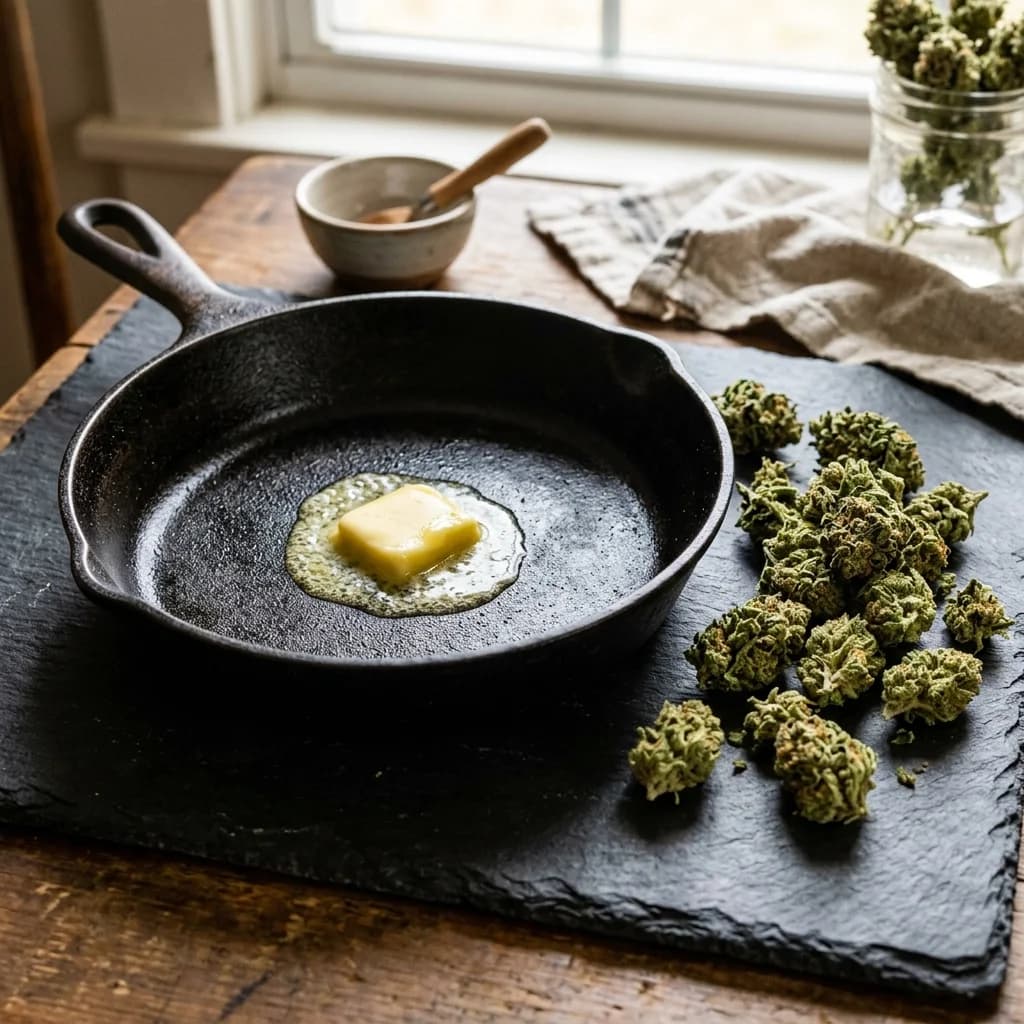
Everything you need to know about cooking with cannabis — the science of decarboxylation, how to make infused butter and oils, calculating dosage per serving, and simple recipes that actually work.
This guide is for educational purposes only. Cannabis is illegal in the UK without a medical prescription. Always consult a healthcare professional before making decisions about cannabis use.
Why Cook with Cannabis?
Decarboxylation: The Most Important Step
The Science in Plain English
THCA has an extra carboxyl group (a cluster of carbon, hydrogen, and oxygen atoms) attached to its molecular chain. This group prevents THCA from fitting into your CB1 receptors. Heat causes this group to break off as carbon dioxide — leaving behind THC, which fits perfectly. That's all decarb is: controlled heating to remove a molecular tag.How to Decarb Cannabis Flower
Preheat your oven to 110°C (230°F). Break your cannabis flower into small pieces — about the size of a rice grain. Don't grind it to powder; you want surface area without creating dust. Spread the pieces evenly on a baking tray lined with parchment paper.Temperature Matters
110°C is the sweet spot. Higher temperatures (150°C+) decarb faster but also destroy more terpenes and can degrade THC. Lower temperatures (90°C) preserve more flavour but take significantly longer (60-90 minutes) and risk incomplete decarboxylation. Use an oven thermometer — most home ovens run hot or cold by 10-20°C. For precise temperature control, some decarb machines and devices are reviewed on Baked & Rated alongside their vaping hardware coverage.Can You Decarb in a Vape?
Yes — and you've probably already done it. When you vape cannabis flower at 170-210°C, you're simultaneously decarboxylating and vaporising the THC. The leftover flower (Already Vaped Bud or AVB) is already decarbed and can be used in edibles. It will be weaker than fresh decarbed flower, but it works. Save your AVB in a jar and use it for infused oils or butter.Infused Butter & Oil
Cannabutter (Infused Butter)
The classic base for brownies, cookies, and savoury dishes. Melt 1 cup (225g) of unsalted butter in a saucepan with 1 cup of water (the water prevents the butter from burning and regulates temperature). Add 7-10g of decarbed, finely ground cannabis. Simmer on LOW for 2-3 hours — the mixture should be at a gentle simmer, not a boil. Stir occasionally. Strain through cheesecloth or a fine-mesh strainer into a container. Refrigerate until solid. The water will separate to the bottom — discard it. The solid green butter on top is your cannabutter.Infused Coconut Oil
Coconut oil has a higher fat content than butter, which means it can hold more THC. It's also dairy-free and has a longer shelf life. Use the same method as cannabutter: 1 cup coconut oil, 1 cup water, 7-10g decarbed cannabis. Simmer 2-3 hours. Strain and refrigerate. Coconut oil solidifies at room temperature and has a subtle coconut flavour that pairs well with chocolate recipes.MCT Oil Tincture
For a faster, more versatile infusion: use MCT oil (a fractionated coconut oil that stays liquid at room temperature). Combine decarbed cannabis with MCT oil in a jar. Place the jar in a slow cooker filled with water (a water bath) and set to low for 2-4 hours. Strain. The resulting oil can be used sublingually (dropped under the tongue for faster onset) or added to food and drinks. This is the most versatile infusion method and closest to what medical clinics produce.Don't Have a Slow Cooker?
For straightforward reviews of infusion machines, decarboxylators, and all the kit that makes cannabis cooking easier, Baked & Rated covers the full range of equipment available in the UK.Dosage Math (It's Simple)
The Formula
Total THC in your batch = (grams of flower used × 1000 × THC percentage) × infusion efficiency.For example: 7g of 15% THC flower, with 80% infusion efficiency:
7 × 1000 × 0.15 × 0.8 = 840mg total THC in your butter or oil.
Per Serving
If you use all your cannabutter to make 24 brownies: 840 ÷ 24 = 35mg THC per brownie. That is a very strong dose — suitable only for experienced users with high tolerance.Realistic Target Doses
Beginner: 2.5-5mg per serving. Regular user: 5-15mg per serving. Experienced: 15-30mg per serving. Heavy tolerance: 30-50mg+ per serving.How to Adjust
If your math gives you 35mg per brownie and you want 5mg per serving, you have two options: use less cannabutter in the recipe (replace part of the butter with regular butter) or make smaller brownies (cut each brownie into 7 pieces).The Golden Rule of Edibles
Label everything clearly. Write the dose per serving on the container. If you're sharing, tell everyone the dose. No one likes surprise 50mg brownies. Read our full dosage guide for more detail on how dosing works.Three Beginner Recipes
1. No-Bake Medicated Cocoa Bites
The simplest possible recipe — no oven required beyond the decarb. Mix 1 cup rolled oats, ½ cup peanut butter, ⅓ cup honey, ½ cup dark chocolate chips, and 2 tablespoons of your infused coconut oil. Roll into bite-sized balls. Refrigerate for 30 minutes. Each ball contains roughly your calculated per-serving dose if you portion evenly. Makes 12-15 bites.2. Classic Cannabis Brownies
Use your favourite boxed brownie mix (Duncan Hines, Betty Crocker — they all work). Replace the oil in the recipe with your infused coconut oil (melted). Replace the butter with your cannabutter if using a from-scratch recipe. Bake according to package directions. The heat from baking (175°C for 20-25 minutes) will not significantly degrade THC — it's already been decarbed. Cut into even squares and calculate dose per square using the formula above.3. Savoury Cannabutter on Toast
The ultimate low-effort edible. Spread your cannabutter on warm toast. Add a pinch of flaky salt. That's it. The fat in the butter binds to the THC, the warmth of the toast helps it melt evenly, and the savoury application doesn't compete with sweet flavours. Start with a very thin spread (about ¼ teaspoon) to gauge potency before committing to a thicker layer. This is the best way to test a new batch of butter before baking with it.Strain Selection for Cooking
For daytime edibles, use a sativa or sativa-dominant hybrid — the effects will feel more energetic and sociable. For evening, use an indica or indica-dominant strain for a more relaxing, body-focused experience. For a deeper dive into strain genetics and lineage, Strain Genetics Archive offers an interactive exploration of how different strains are bred and what effects they produce.Storing Your Edibles
Quick Questions
About the Author
Dave Mak
Dave founded The Budophile to create clear, honest cannabis education for UK beginners. With a background in health research and a network of specialist contributors, he ensures every guide is accurate, evidence-based, and practical. He also runs Baked & Rated for product reviews and The Green Prescription for medical cannabis access guidance.
Continue Learning
Understanding Dosage
Read this guide next →
Cannabis Edibles Guide
Read this guide next →
How to Store Cannabis
Read this guide next →
The Seasonal Cannabis Guide
Read this guide next →
Cannabis & Nature: Hikes, Camping & the Outdoors
Read this guide next →
The Social Cannabis Guide
Read this guide next →
Cannabis for Women's Health
Read this guide next →
Cannabis for Seniors
Read this guide next →