Cannabis for ADHD: What the Research Says

Does cannabis help ADHD? Explore clinical evidence on focus and impulsivity, strain and dosing advice, long-term risks, and UK clinic access.
This guide is for educational purposes only. Cannabis is illegal in the UK without a medical prescription. Always consult a healthcare professional before making decisions about cannabis use.
ADHD and the Turn to Cannabis
The Self-Medication Hypothesis
Dopamine Dysregulation
ADHD is associated with reduced dopamine signalling in the prefrontal cortex — the region responsible for executive function, focus, and impulse control. Stimulant medications work by increasing dopamine availability. THC also triggers dopamine release in the striatum, though through a different mechanism (CB1 receptor agonism rather than reuptake inhibition). A 2023 PET imaging study found that THC increased dopamine release by 15-20% in healthy volunteers, which may temporarily improve motivation and focus in ADHD brains.Hyperactivity and Anxiety
Many adults with ADHD describe a constant 'internal restlessness' — a racing mind that makes relaxation and sustained attention difficult. CBD, which has well-documented anxiolytic properties, may quiet this background noise. A 2025 survey of 850 UK medical cannabis patients found that 47% of those prescribed for anxiety also had an ADHD diagnosis, suggesting significant comorbidity that cannabis may address across both conditions.Emotional Dysregulation
ADHD involves more than inattention — emotional dysregulation (intense, reactive emotional responses) is a core but often overlooked feature. Cannabinoids modulate activity in the amygdala and prefrontal cortex, regions central to emotional regulation. A 2024 fMRI study found that CBD reduced amygdala reactivity to emotional stimuli by 25% compared to placebo, which may be relevant for ADHD-related emotional volatility.What the Research Says
Focus and Inattention
A 2025 randomised crossover trial of 30 adults with ADHD receiving either THC-dominant (10mg), CBD-dominant (400mg), or placebo vaporised cannabis found that the THC condition improved performance on a sustained attention task at 30 minutes post-administration but worsened it at 2 hours — suggesting a narrow therapeutic window. The CBD condition showed no significant improvement on attention measures.Hyperactivity and Impulsivity
A 2024 observational study of 150 medical cannabis patients with ADHD tracked symptom changes over 6 months. Patients using CBD-dominant products (CBD:THC ratio > 10:1) reported a 31% reduction in hyperactivity scores on the Adult ADHD Self-Report Scale at 3 months, sustained at 6 months. Those using balanced or THC-dominant products showed smaller improvements and higher dropout rates due to side effects.Real-World Data
Data from Project Twenty21 — the UK's largest medical cannabis outcomes registry — includes 78 patients prescribed cannabis for ADHD between 2021 and 2025. At 3 months, 57% of patients reported clinically meaningful improvement in ADHD symptoms (measured by the GAD-7 and EQ-5D-5L). However, the registry is observational, lacks a placebo control, and the drop-out rate was 31% — primarily due to side effects including sedation, anxiety, and lack of efficacy.Longitudinal Studies
A 2022 systematic review of 10 studies (n=1,067) found that cannabis use in adolescents and young adults was associated with a small but significant increase in self-reported ADHD symptoms over time, particularly inattention. The direction of causality is unclear — it may be that individuals with more severe ADHD are drawn to heavier cannabis use, rather than cannabis causing ADHD symptoms to worsen. But the association warrants caution, especially for younger patients whose prefrontal cortex is still developing.Strain and Dosing Considerations
Sativa vs Indica
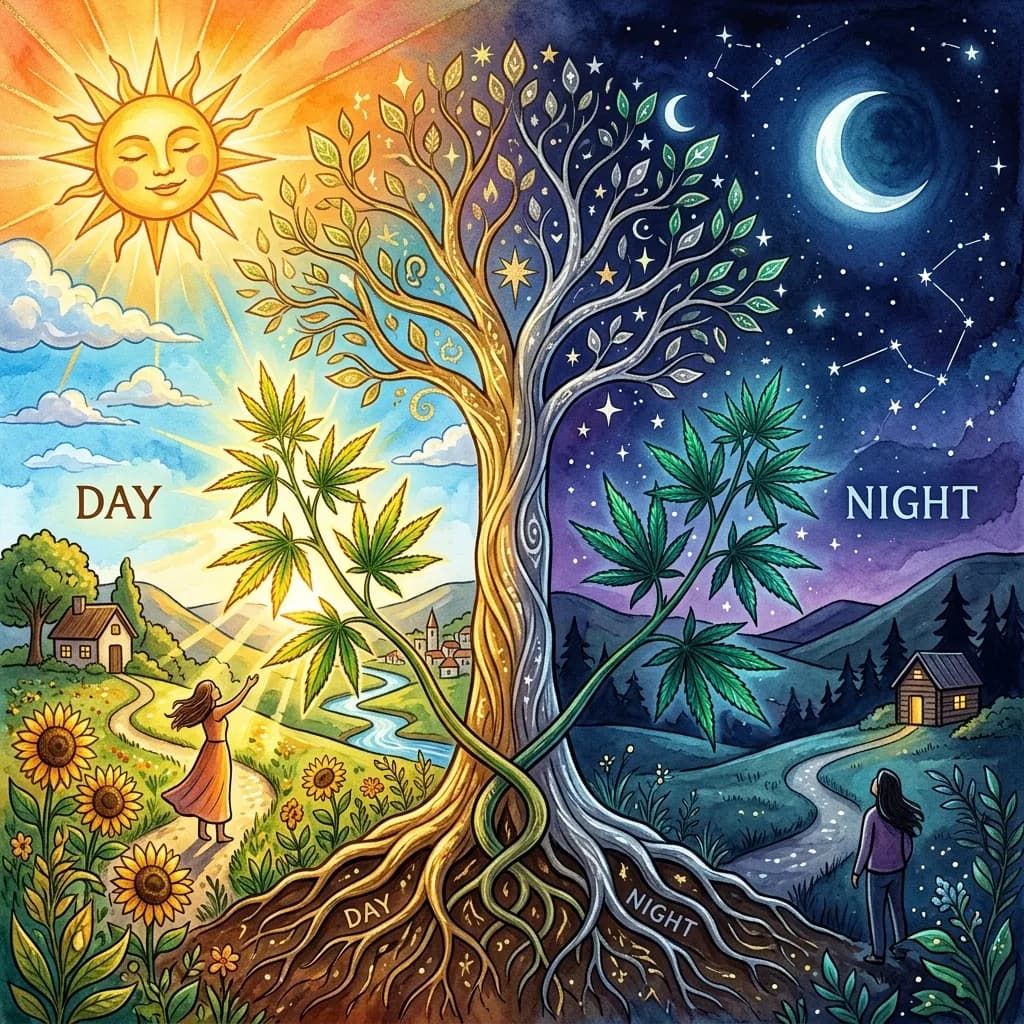
Patient reports consistently describe sativa-dominant strains as better for daytime ADHD symptom management, with users citing improved focus, motivation, and reduced mental fog. Indica-dominant strains are more commonly used in the evening to wind down from an overactive mind. A 2025 survey of 410 medical cannabis patients with ADHD found that 58% preferred sativa or sativa-dominant hybrids for symptom relief, 22% preferred balanced hybrids, and only 12% preferred indicas.THC:CBD Ratios
Higher CBD ratios appear to be better tolerated for ADHD. Products with a CBD:THC ratio of at least 4:1 (e.g., 16mg CBD + 4mg THC) are the most common prescription pattern among UK private clinics treating ADHD. High-THC products (>15% THC) are associated with increased anxiety, paranoia, and cognitive impairment — the opposite of what most ADHD patients need. Microdosing THC (2.5-5mg) alongside CBD is the most evidence-supported approach.Route of Administration
Inhalation (vaping flower) provides rapid onset (1-5 minutes) and precise dose control, making it easier to titrate to symptom relief without overshooting into intoxication. Oils and edibles have a slower onset (30-90 minutes) and longer duration (4-8 hours), which suits sustained symptom coverage but makes dose adjustment more difficult. A 2026 UK clinic audit found that 71% of ADHD patients prescribed cannabis preferred vaporised flower, 22% used oils, and 7% used a combination.Timing
Many patients with ADHD report that cannabis works best as a 'situational tool' rather than a round-the-clock medication. Using a low-THC, CBD-rich vape for focused work sessions or during periods of high distractibility is a common strategy. Evening use of an indica or CBN-containing product may help with the sleep difficulties that affect 75% of adults with ADHD.Risks and Cautions
Executive Function Impairment
Acute THC intoxication impairs working memory, attention, and decision-making — the very functions that are already compromised in ADHD. A 2024 study found that a single 10mg THC dose reduced performance on a working memory task by 18% in adults with ADHD, compared to 11% in controls. The impairment was most pronounced in the first 2 hours post-administration. This creates a paradox: cannabis may help with some ADHD symptoms while worsening others, depending on dose and timing.Medication Interactions
Cannabis can interact with stimulant medications. THC amplifies the cardiovascular effects of stimulants (increased heart rate and blood pressure), which may be clinically significant in patients with underlying cardiac risk. CBD inhibits CYP2D6, the liver enzyme that metabolises amphetamine-based stimulants like lisdexamfetamine, potentially increasing their blood levels. Any patient prescribed both should be closely monitored by a specialist.Dependence and Withdrawal
People with ADHD are at increased risk of substance use disorders generally, and cannabis is no exception. A 2025 meta-analysis found that adults with ADHD were 2.7 times more likely to develop cannabis use disorder than those without ADHD. Withdrawal symptoms — irritability, anxiety, sleep disruption, loss of appetite — can mimic ADHD symptoms, making it difficult to distinguish between the condition and dependence.Long-Term Cognitive Effects
Regular cannabis use during adolescence is associated with persistent deficits in attention and executive function that may not fully resolve with abstinence. For adult-onset use, the evidence is less clear. A 20-year longitudinal study published in 2024 found no significant difference in cognitive decline between adults who used cannabis regularly and those who did not, after controlling for baseline IQ and socioeconomic factors. However, subjective cognitive complaints (brain fog, memory lapses) are more common among regular users.Legal Status and Medical Access for ADHD in the UK
Quick Questions
About the Author
Dave Mak
Dave founded The Budophile to create clear, honest cannabis education for UK beginners. With a background in health research and a network of specialist contributors, he ensures every guide is accurate, evidence-based, and practical. He also runs Baked & Rated for product reviews and The Green Prescription for medical cannabis access guidance.
Continue Learning
THC vs CBD
Read this guide next →
CBD vs THC for Anxiety
Read this guide next →
Microdosing Guide
Read this guide next →
Cannabis & Mental Health
Read this guide next →
Indica vs Sativa
Read this guide next →
Understanding Dosage
Read this guide next →

Medical Access
Read this guide next →

Qualifying Conditions
Read this guide next →