Is CBD Legal in the UK?
7 min readBeginner Level

Complete guide to CBD legality in the UK — the three legal conditions, FSA novel food regulations, THC limits, medical claims rules, and how the law compares with medical cannabis and recreational THC.
This guide is for educational purposes only. Cannabis is illegal in the UK without a medical prescription. Always consult a healthcare professional before making decisions about cannabis use.
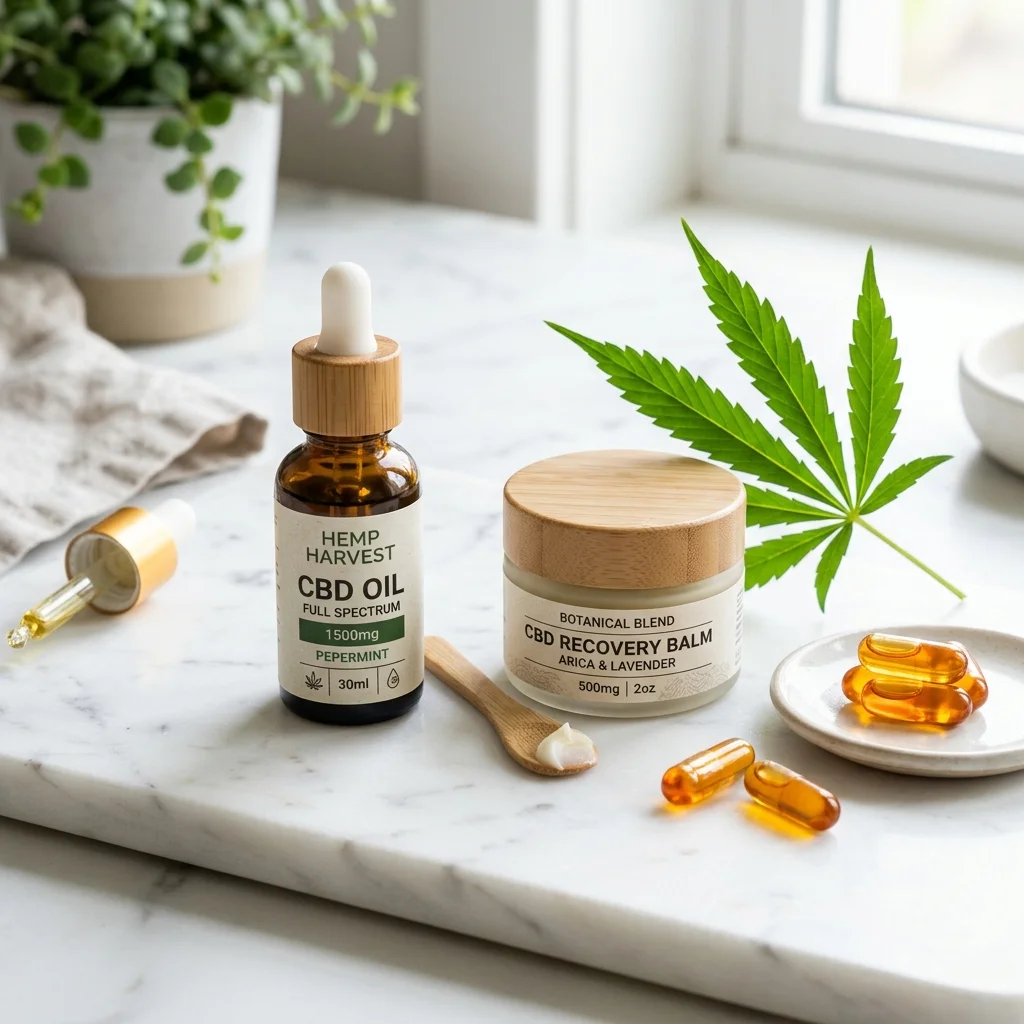
CBD is legal in the UK provided it meets three conditions. If a product fails any of these, it's technically illegal to sell, though enforcement varies.
Condition 1: THC content under 0.2%. The product must contain less than 0.2% THC (or no more than 1mg per container). This applies to all CBD products — oils, gummies, vapes, topicals, and capsules. For full-spectrum products, the trace THC must come from naturally occurring hemp compounds, not from added THC. Broad-spectrum and isolate products typically test at non-detectable THC levels.
Condition 2: Not marketed as a medicine. CBD products cannot be sold with medicinal claims (e.g. 'treats anxiety', 'cures pain', 'reduces inflammation') unless they have a medicine licence from the MHRA. Only three CBD-based medicines have this licence: Epidyolex (for epilepsy), Sativex (for MS spasticity), and Nabilone (for chemotherapy nausea). All other CBD products must use food supplement claims like 'supports relaxation' or 'helps maintain calm.'
Condition 3: Novel food compliance. Since 2019, the FSA has classified CBD as a novel food. This means all CBD products sold in the UK as food supplements must have a validated novel food application with the FSA. The enforcement deadline is November 2026 — after this date, products without authorisation may be removed from shelves.
The novel food regulation is the biggest change facing the UK CBD industry. It was introduced because CBD was not widely consumed as a food before 1997 (the cut-off for 'traditional' food status), so it needs a safety assessment before it can be sold legally.
CBD brands and their trade bodies submitted over 13,000 product applications to the FSA. As of mid-2026, the FSA is working through these applications to create a 'public list' of products that can remain on sale. Products not on this list should not be sold after the November 2026 deadline.
For consumers, this regulation is good news. It will force low-quality and non-compliant CBD products off the market, making it easier to identify reputable brands. If a product is still available after November 2026, it has passed the FSA's safety assessment — a strong quality signal.
To check if a specific product is FSA-compliant, look for a statement on the brand's website, or check the FSA's public list of novel food applications (search 'FSA novel food CBD list' to find it).
Who can buy CBD? You must be 18 or over to purchase CBD products in the UK. Some retailers set a higher minimum age (21) as company policy, but 18 is the legal minimum.
Where can I buy CBD? CBD products are widely available — health food shops, pharmacies (including Boots and Superdrug), vape stores, supermarkets, specialist CBD shops, and online. There is no limit on how much CBD you can buy or possess.
Can I sell CBD products? Selling CBD as a business requires compliance with novel food regulations, general food law, and trading standards. The FSA has recommended a daily intake limit of 70mg of CBD for healthy adults, and products should include this on their labelling.
Can I import CBD for personal use? Importing CBD from outside the UK is legally complex. The product must comply with UK novel food and THC regulations. Products from the US or EU that are legal in their country of origin may not meet UK standards. If you're buying online from a UK-based brand that sources internationally, you're fine. Importing yourself carries legal risk.
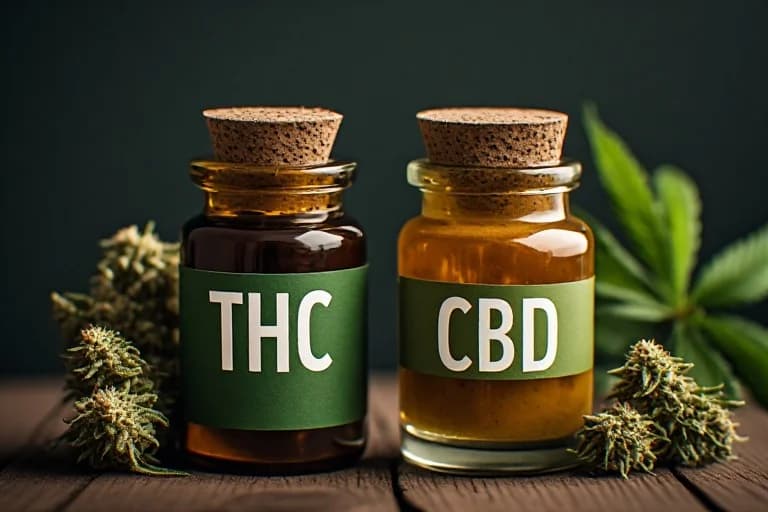
CBD and THC sit on opposite sides of UK cannabis law. Understanding the difference is important, especially as the two are often confused.
CBD (cannabidiol) is non-psychoactive and legal as a food supplement under the conditions above. It is not a controlled substance. You can buy it, possess it, and use it freely at any age over 18.
THC (tetrahydrocannabinol) is a Class B controlled substance under the Misuse of Drugs Act 1971. Possession carries up to 5 years in prison and an unlimited fine. THC is only legal in two circumstances: medical cannabis prescribed by a specialist doctor (extremely rare on the NHS, more common via private clinics), and Sativex for MS spasticity also via prescription.
This is why full-spectrum CBD products walk a legal tightrope. The trace THC (under 0.2%) is permitted, but the product must not be marketed as a medicine, and the THC must be naturally occurring from hemp — not extracted or concentrated from THC-rich cannabis.
The November 2026 FSA deadline will reshape the UK CBD market. Expect to see many smaller and lower-quality brands disappear from the market. For consumers, this means fewer choices but higher average quality. Prices may initially rise as compliant brands recoup their regulatory costs.
There is growing pressure from industry bodies for the MHRA and FSA to create a clearer regulatory pathway for CBD as a 'botanical' product rather than a novel food. If adopted, this could reduce compliance costs and open the door to more nuanced health claims backed by evidence.
Internationally, the CBD market is evolving rapidly. The WHO continues to review evidence on CBD safety and efficacy. If the WHO recommends rescheduling cannabis internationally, UK law would likely follow — potentially creating a more permissive regulatory framework. However, this is a slow-moving process and significant change is unlikely before 2028 at the earliest.
For now, CBD is legal and widely available in the UK. Buy from reputable brands with visible third-party lab reports, and you're on safe ground — both legally and from a quality perspective.
Quick Questions
About the Author
DM
Dave Mak
Dave founded The Budophile to create clear, honest cannabis education for UK beginners. With a background in health research and a network of specialist contributors, he ensures every guide is accurate, evidence-based, and practical. He also runs Baked & Rated for product reviews and The Green Prescription for medical cannabis access guidance.